A stone in your kidney but no pain…what to do?

Spero072215-400x250

In general “if it ain’t broke don’t fix it” however…read on…

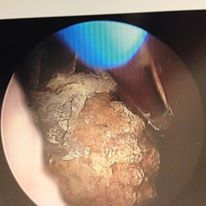
Your Best Management for Asymptomatic Nonobstructing Kidney Stones

Urology – August 30, 2015 – Vol. 33 – No. 2

Lower-pole kidney stones are less likely to become symptomatic during observation.

Article Reviewed: The Natural History of Nonobstructing Asymptomatic Renal Stones Managed With Active Surveillance. Dropkin BM, Moses RA, et al: J Urol; 2015;193 (April): 1265-1269.

Objective: To determine the natural history of observed nonobstructing asymptomatic kidney stones and factors associated with eventual stone-related events.

Design: Retrospective chart review of the records of 160 kidney stones in 110 patients on active surveillance.

Methods: Stone characteristics, patient characteristics, and stone-related parameters were evaluated to determine factors for stone-related symptoms, spontaneous passage, requirement for surgical intervention, and stone growth.

Results: 160 stones with an average size of 7.0 mm ± 4.2 mm in 110 patients were followed up 41 ± 19 months. A total of 28% (45 of 160) of stones caused symptoms and 2% (3 of 160) caused silent obstruction on average of 37 ± 17 months. Upper-pole/mid-pole stones were more likely than lower-pole stones to become symptomatic (40%) or pass spontaneously (15%). No other factors demonstrated statistical significance in predicting symptoms.

Conclusions: Over a 3-year period, most asymptomatic nonobstructing renal calculi remained asymptomatic. Approximately 30% caused symptoms, 20% required surgical intervention, 20% grew >50% initial size, and 7% passed spontaneously. Lower-pole stones caused fewer issues than upper- or mid-pole stones. Silent obstruction may occur and necessitates regular imaging and follow-up of even asymptomatic stones.

Reviewer’s Comments: This is a very nice article following the natural history of asymptomatic nonobstructing kidney stones, which are often picked up on imaging for other indications. It shows almost identical results to previous studies, which is that over a specified period (average of 3 years in this study), approximately 30% of stones will become symptomatic or need intervention. In this study, however, if you account for patients (instead of stones), nearly 40% became symptomatic over the study period. One must also consider that 20% of stones in this study grew >50% their original size. A small percentage developed silent obstruction, which is the most concerning aspect in regard to possible renal function loss. The authors conclude that most stones remain asymptomatic over time and hint that active surveillance may be the best option. The authors make a very valid point. However, the debate becomes whether you and your patient consider 30% to 40% as an acceptable number. Are we really saving 70% of individuals from needed intervention or having symptoms, or are we just delaying the inevitable? With the exception of uric acid stones, which may dissolve, stones do not disappear. I think with longer follow-up, more will eventually become symptomatic. Whether you treat prophylactically or only treat history of kidney stones, and lifestyle. Overall, this is a nice article to provide numbers to patients in regard to nonobstructing asymptomatic kidney stones.(Reviewer–David A. Duchene, MD).


Sex helps pass kidney stones?

Want to improve your sex life? Get a kidney stone!
download (3)

Urology – January 30, 2016 – Vol. 33 – No. 9

Sexual intercourse 3 to 4 times per week may increase the probability of spontaneous stone passage for distal ureteral stones <6 mm in size.

Article Reviewed: Can Sexual Intercourse Be an Alternative Therapy for Distal Ureteral Stones? A Prospective, Randomized, Controlled Study. Doluoglu OG, Demirbas A, et al: Urology; 2015;86 (July): 19-24.

Objective: To investigate the role of sexual intercourse on passage of distal ureteral stones.

Design: Prospective, randomized controlled study.

Participants: 90 male patients with distal ureteral stones <6 mm in size undergoing a trial of spontaneous passage.

Methods: Group 1 was randomized to sexual intercourse 3 to 4 times a week, group 2 received tamsulosin 0.4 mg/day for medical expulsive therapy, and group 3 served as a control. Expulsion rate was compared at 2 and 4 weeks.

Results: Mean stone size was similar between all groups at just under 5 mm (group 1, 4.7 mm; group 2, 5.0 mm; group 3, 4.9 mm). At 2 weeks, 83.9% (26/31) patients in the sexual intercourse group had passed stones. In comparison, 47.6% (10/21) in the tamsulosin group and 34.8% (8/23) in the control group had passed stones (P =0.001). At 4 weeks, the differences lost significance, but still showed benefit for the sexual intercourse group with 93.5% passage compared to 81.0% passage in the tamsulosin group and 78.3% passage in the control. The mean expulsion time was 10.0 days in the sexual intercourse group, 16.6 days in the tamsulosin group, and 18.0 days in the control group.

Conclusions: Sexual intercourse 3 to 4 times per week may increase the probability of spontaneous stone passage for distal ureteral stones <6 mm in size.

Reviewer’s Comments: This study led to lots of conversation given the unique and unusual approach proposed to improve spontaneous ureteral stone passage. The authors hypothesized that sexual intercourse may improve spontaneous stone passage by nitric oxide release leading to relaxation of ureteral muscles. They found that the sexual intercourse group passed their stones much faster than either the tamsulosin or control group. While intriguing, several problems exist with the study, which makes me somewhat surprised that it was published. The study is extremely underpowered based on overestimations in initial statistical planning. No compliance measures with sexual activity and/or lack of sexual activity or with taking tamsulosin as prescribed were performed. Only 6% of patients were lost to follow-up in the sexual activity group compared to 23% in the tamsulosin and control arms. If those patients were lost to follow-up because they passed their stones, then the study would have no significance. Last, sexual activity would be a very brief exposure of nitric oxide to the ureter (if the theory is correct). Younger patients should still get nocturnal erections, which would also release nitric oxide for brief periods. It seems that a more consistent delivery of nitric oxide such as with PDE5 inhibitors may be more successful, and PDE5 inhibitors have shown some promise in early studies. Overall, the study makes a good headline and interesting discussion, but much better studies are needed to find a relevant method to facilitate stone passage.(Reviewer–David A. Duchene, MD).

Northeast Georgia Urological Associates-Active Surveillance for Prostate Cancer

If you have been recently diagnosed with prostate cancer you owe it to yourself and your family to watch the following video. Active surveillance should be considered by you to be one of the treatment options for your prostate cancer.

image t

Contact us 24/7 for an appointment-Leave your number in the form below and we’ll call you the next business day. Our urologists have over thirty years of experience in management and treatment of prostate cancer.

← Back

Thank you for your response. ✨

Fall is in the air…bladder healthy soup?

Soup

Take advantage of the extra time you spend inside this winter to make some tasty meals. Here is a recipe for Chicken and White Bean Soup. It’s made with ‘good for you’ ingredients – and won’t bother a sensitive bladder.

Makes 6 servings, 1 ½ cups each
Calories per serving: 172

Read More…

Need an appointment? Contact us 24/7 and leave your number and we’ll call by the next business day.

← Back

Thank you for your response. ✨

Myths about premature ejaculation…and other information/treatment.

Premature Ejaculation – Common Myths Debunked

Premature ejaculation – and ejaculation in general – is complex and not well understood. As a result, there are numerous beliefs about PE that are either not true nor backed up by scientific evidence.  Below are the most common myths about PE along with the best facts available along with numerous resources for learning more about PE from medical institutions. Read More…

orange_pie_chart_-_use

The Urologists at Northeast Georgia Urological Associates treat all forms of sexual dysfunction. Premature ejaculation often times requires a multi-functional approach combining treatment options for optimal results. Feel free to contact us for an appointment.

Make an appointment 24/7-Give us your number and we’ll call with an appointment the next business day.

← Back

Thank you for your response. ✨

Why do girls get bladder infections more frequently than boys?

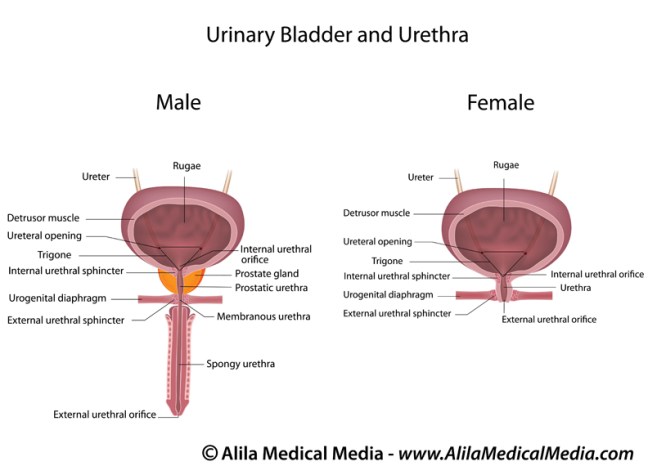
Because of the difference in the length of the urethra, the female’s being much shorter, it is easier for bacteria from the outside world to get into the bladder.

Comparing male and female urinary systems

  • Although most patients think of Ecoli as a very bad bacteria, it is actually the most common cause of bladder infections.
  • The most common source of bacteria causing a bladder infection is the person’s own body.
  • That is why in females with recurrent urinary infections the urologist will commonly prescribe a low dose antibiotic to take after sexual intercourse.
  • The reason females get urinary tract infections more commonly than males is due to the difference in the length of the urethra.
  • As seen in the above diagram, the female urethra is much shorter than the males.
  • As a result it is easier for bacteria to get into the bladder and and then multiply to cause the symptoms of a bladder infection.
  • In a male by the time the bacteria gets in the urethra and begins its travel to the bladder, the male may void and hence wash out the offending bacteria before it can become a true infection.
  • An infection in a male is viewed more seriously than in a female for the above reasons.
  • Suppressive therapy (a small amount of an antibiotic daily), self treatment protocol (the patient treats herself with a short course of antibiotics at the earliest sign of an infection), or post coital therapy (a pill after sex) are all methods used to manage recurrent urinary tract infections in a female.
  • The lack of estrogen in the post menopausal female can contribute to infections and this too is addressed in the female with recurrent urinary tract infections.

The urologists at Northeast Georgia Urological Associates treat recurrent urinary infections in both the male and female on a daily basis. Feel free to contact us for an evaluation if this is an issue for you.

You can email 24/7 and leave your phone number and we’ll call back to arrange an appointment ASAP!

← Back

Thank you for your response. ✨

Northeast Georgia Urological Associates-What is Peyronie’s Disease?

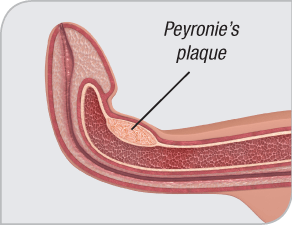
Mechanism of Peyronie’s Disease

mod-thumb

Treatment Options for Peyronie’s Disease-Mayo Clinic

Johns Hopkins-Peyronie’s

Xiaflex Webpage-Peyronie’s Disease Overview

Who was Peyronie?

download

François Gigot de la Peyronie (pronounced: [fʁɑ̃swa ʒiɡod la pɛʁɔni]; 15 January 1678 – 25 April 1747) was a French surgeon who was born in Montpellier, France. His name is associated with a condition known as Peyronie’s disease. Continue reading Northeast Georgia Urological Associates-What is Peyronie’s Disease?

Northeast Georgia Urology-Prostate Screening-A white board animation.

What the newly diagnosed male with prostate cancer thought was a simple disease of older men, becomes much more complicated once the decision process begins. This animation highlights the conundrum that is prostate cancer.