Minimally invasive prostate enlargement treatment vs. more minimally invasive treatment. GreenLight Laser vs. Rezum.

Georgia Vasectomy Reversal Center's avatarGeorgia GreenLight Laser

popeye-the-sailor-bluto

The GreenLight uses laser energy to vaporize prostate tissue. The obstructing prostate tissue is destroyed or removed at the time of the procedure.

Rezum uses radio frequency generated steam injected into the prostate tissue to bring about changes that will over time shrink the prostate tissue away from the channel men urinate through.

The effect of the GreenLight procedure is for the most part immediate. The effect of the Rezum occurs over time.

The Rezum is “more” minimally invasive because it takes less time to perform, nothing is cut or destroyed and essentially very little risk of bleeding. There is usually 2-4 nine second treatments with Rezum and the steam is injected through a small catheter by way of puncturing the prostate.

So…who should choose which?

You can do the GreenLight with good results on most any obstructive prostate. However is a patient has been in retention (can not urinate…

View original post 202 more words

Popular Patient Educational Materials.

dsc_0135

Check out the AUA’s latest patient educational materials from the Urology Care Foundation!

We’ve been busy updating and adding new patient education materials to UrologyHealth.org.

Print and share our free materials below with your friends and family.

Pediatric Health

Bladder Health

Prostate Cancer

Kidney Health

Two negative prostate biopsies, taking Proscar and Psa 13. What to do?

ds00043_%20hq01273_%20my00182_im00848_mcdc7_normal_prostate_glandthu_jpg

This is a real scenario and shows the complexity of managing certain situations about the prostate. Part of the problem is the common misconceptions about the prostate and prostate  cancer. As well all the things you read in the paper or hear on TV about new studies showing that the PSA is unreliable and is used too often by Urologists and in turn resulting in too many men being biopsied and then subsequently being treated…and subsequently as a result negatively affecting their lives with incontinence and impotence.

So imagine you are in the exam room with your doctor in the above situation and your urologist is walking you through the fine line of doing just the right amount of tests or procedures to determine if you have prostate cancer. The bottom line is that if you have cancer and this is found out a year after your office visit…you’d be quite disappointed and probably mad…probable the word “lawyer” may come to mind.

As Bart Simpson said when asked his thoughts on “why does increasing military might and expenditures on weaponry actually act a deterrent to war?”

Bart had wrongly been put in a genius class because the test scores of a brilliant student had been attributed to him. He said, “Well.. I guess you’re damned if you do and damned if you don’t!”

download-2-bart

So…in the conundrum I’ve described in the title of this post…the issues-

  • The two negative biopsies performed five years ago were negative however that was five years ago and things change. Just because a patient says, “But I have had a biopsy before and it was okay. Isn’t that enough?” Well a lot can happen or change in five years. Yes you didn’t have it then but that was then and this is now.
  • There is the issue of prostate cancer being in unusual places in the prostate that is not a easily sampled on a biopsy. If you look at a picture of a prostate the part that is examined by the urologist  on a rectal exam is the posterior lobe of the prostate. This does not examine the inner or anterior aspect of the prostate. The exam is a good exam and necessary but does not evaluate the “entire gland.”
  • Now you throw in the drug Proscar or generic name Finasteride. Five years ago the biopsies were negative and the PSA then was 15. Now the PSA is 13. The patient concludes that- I have had two negative biopsies and now my PSA is less than five years ago. Well Proscar lowers the PSA by about 50%. So off the Proscar this patient’s PSA could well be 20.
  • The patient stops going to the Urologist because his family doctor is doing the PSA now and it is less than five years ago but the family doctor and the patient are looking at a PSA that hasn’t changed appreciably and “stay the course.”
  • The PSA being the same or lower is not better. The Proscar is “masking” the true value.
  • So the feeling is that all is well with this patient. Well to the urologist who sees this patient…he is concerned. He also has to explain the above and put out there that some other sort of evaluation must be done to be sure the Proscar isn’t deceiving everyone.
  • If the patient for whatever reason  goes back to the urologist, the urologist will note the scenario above and recommend doing something to update the situation and hopefully show that there is indeed no prostate cancer. Again sitting on this situation and the patient is found to have an aggressive form of prostate cancer because it has been allowed to smolder undetected because of the masking effect of the Proscar…well that is a problem for all. I would think the urologist would found potentially at fault.
  • Again remember in the back drop…all the misconceptions that prostate cancer is the slow growing type and that people don’t die of it. And of course the old standby by the male not wanting a rectal exam or another biopsy, “I don’t have any symptoms.”
  • The channel that the male voids through is well away from the posterior aspect of the prostate and so for there to urinary symptoms the cancer would have to be extensive to cause voiding symptoms. In other words when found it is too late.

How about this added to the above scenario? The patient has seen the urologist and has had the two negative biopsies and his PSA is stable on the Proscar (which actually is worrisome..it should be half). The family doctor gets the PSA, and it is unchanged. The family doctor says to the patient, “I’ll leave your prostate exam to your urologist.” The patient however has not seen his urologist for five years. Uh oh! Do you see the perfect storm brewing…yes quite the opportunity for the late diagnosis of prostate cancer due to numerous factors and misconceptions on several layers. Of note in the above situation…the urologist is out of the loop. The patient has stopped going to him and being “checked up” by the family guy.

This is like in baseball the center fielder and the right fielder are both approaching a fly ball. The center fielder yells as they both close in on the ball, one in which it looks like both could catch but both struggling to get there. The center fielder says, “I got it.” The right fielder backs off, the center fielder realizes that he will not be able to get to the ball and then yells, “You take it.” The ball falls safely between the two fielders. Just as too many chefs spoil the soup so too it can be said of doctors “I got it, you take it” type arrangement in which things fall through the proverbial cracks of patient care.

So one day on the blood work of the family doctor the PSA does go up. “Hmmmm, your PSA is going up. Have you been seeing your urologist? You haven’t? Well it may time to go back to him and let him evaluate these numbers.” The doctor then remembers that the patient is on the Proscar. He becomes concerned.

The family doctor remembers the warnings that pop up on his medical record screen regarding patient’s taking Proscar: Proscar does not cause prostate cancer if prostate cancer is found in a patient taking Proscar it is further along and more aggressive, i.e. the “masking effect” in lowering the PSA delays the diagnosis.

The patient is now back with his urologist after five years and the options are discussed.

  • Of course now a rectal exam is done after five years of not checking it.
  • You could do another biopsy
  • You could do a prostate MRI
  • You could do various PSAs that predict the chances of a positive biopsy

If another biopsy is done it may be negative but it may not. And this is not a situation  the patient, the family doctor or the urologist wants to be in.

Summary-Negative biopsies, being on Proscar, reluctant male patients  not wanting to be messed with, misconceptions about prostate cancer, misunderstandings of the family doctor thinking the urologist is more involved in the care of a patient than the urologist actually is-all create a perfect storm of the late diagnosis of prostate cancer.

As my mother would say, “A word to the wise is sufficient”

Systematic counseling and rates of acceptance of active surveillance

If your doctor has not mentioned Active Surveillance as an option for your prostate cancer…consider a second opinion. It may not be the best option for you but it should be mentioned for your consideration.

Sitemaster's avatarTHE "NEW" PROSTATE CANCER INFOLINK

According to a newly published paper in European Urology, a simple, hour-long lecture and training session can improve the ability of physicians to counsel patients systematically about active sureveillance and, at one major center, improved patient acceptance of active surveillance by as much as 17 percent.

This new paper by Ehdaie et al. discusses the development and implementation of a systematic method by which physicians can and potentially should counsel patients with very low- and low-risk prostate cancer to increase acceptance of active surveillance. The approach is based on the use of “framing techniques” that underlie principles of communication studies by negotiation scholars. The goal was to find ways to overcome perceived difficulties experienced by physicians in convincing newly diagnosed, low-risk prostate cancer patients about the merits of active surveillance and thus to avoid the tendency of many patients to unnecessarily elect immediate radical treatment for low-risk forms of prostate…

View original post 363 more words

How long to pregnancy after vasectomy reversal?

The time from having a microscopic vasectomy reversal and achieving pregnancy varies. Here’s an article from vasectomy.com.

Unknown's avatarGeorgia Vasectomy/Vasectomy Reversal-John McHugh M.D.

From Vasectomy.com

a-reversal-success-twins

Although vasectomies should be viewed as a permanent form of birth control, there may be certain circumstances in which a man desires to have his vasectomy reversed. If this is the case, questions might arise about how long it takes for a vasectomy reversal to result in pregnancy.

There are no definitive answers. Research indicates that, if a reversal is successful, it can take anywhere from three months to several years for couples to get pregnant. Up to 75 percent of all vasectomy reversals ultimately lead to natural pregnancies, with over half occurring in the first two years.

However, there are several factors that impact whether conception will occur and how quickly:

  • Type of vasectomy reversal procedure: The type of vasectomy reversal procedure a man has will impact reversal success and pregnancy outcomes. Men who have a vasovasostomy — the shorter and simpler of the two types…

View original post 380 more words

Want to understand Overactive Active Bladder (OAB) better? Read on!

The bladder has a contraction phase for emptying and a storage phase that allows for storing urine. Sometimes problems with both functions contribute to OAB symptoms of frequency, urgency, getting up at night and incontinence. This is why sometimes the urologist will use two medicines to maximize treatment results.  The articles below explain.

Astellas Website with OAB patient resources.

Do You Know the 2 Neural Pathways of OAB?

Sponsored by Astellas Pharma US, Inc.


What is overactive bladder?

Overactive bladder (OAB) is a clinical diagnosis characterized by a sudden, urgent need to urinate, with or without urine leakage, usually with daytime and nighttime (nocturia) frequency, in the absence of a urinary tract infection or other obvious pathology.1

Neurologic control of the bladder

As you may know, the urinary bladder has 2 primary functions: filling/storing urine during the storage phase, and rapidly expelling urine during the voiding (micturition) phase. The symptoms of OAB are usually associated with involuntary contractions of the detrusor muscle. This may result in urgency or urge incontinence.2,3

astellas - neurologic control of the bladder

Neurotransmitters and the bladder

In the storage phase3:

    1. Norepinephrine released from sympathetic nerves interacts with β3‑adrenergic receptors
    2. Adenylate cyclase is activated, increasing intracellular cAMP levels
    3. Bladder smooth muscle relaxes
  1. M2/M3 receptors are the predominant muscarinic receptors found in the bladder. Binding of acetylcholine to M3 receptors on the detrusor muscle activates a signaling pathway that leads to bladder contraction and voiding. M3 receptors appear to be important for normal bladder contraction with M2 receptor activation serving a more prominent role in certain disease states (demonstrated in vitro)4-6
astellas - bladder neurotransmitters

Do your OAB patients know what’s causing their symptoms?

Astellas is committed to helping your OAB patients better understand their symptoms.
Visit https://www.astellasresources.com/urology-resources for patient tools and helpful resources.

QUIZ

Which of the following is the correct signaling cascade?

  1. Sympathetic nerve → acetylcholine → β3‑adrenergic receptors → bladder relaxation
  2. Parasympathetic nerve → acetylcholine → muscarinic receptors → bladder contraction
  3. Parasympathetic nerve → norepinephrine → muscarinic receptors → bladder relaxation
  4. Sympathetic nerve → norepinephrine → β3‑adrenergic receptors → bladder contraction

Correct! The correct signaling cascade is Parasympathetic nerve → acetylcholine → muscarinic receptors → bladder contraction

Incorrect! The correct signaling cascade is Parasympathetic nerve → acetylcholine → muscarinic receptors → bladder contraction

References:

  1. Gormley EA, Lightner DJ, Burgio KL, et al. Diagnosis and Treatment of Overactive Bladder (Non-Neurogenic) in Adults: AUA/SUFU guideline. Linthicum, MD: American Urological Association Education and Research, Inc.; 2014:1-57.
  2. Andersson KE, Arner A. Urinary bladder contraction and relaxation: physiology and pathophysiology. Physiol Rev. 2004;84(3):935-986.
  3. Ouslander JG. Management of overactive bladder. N Engl J Med. 2004;350(8):786-799.
  4. Chess-Williams R, Chapple CR, Yamanishi T, Yasuda K, Sellers DJ. The minor population of M3-receptors mediate contraction of human detrusor muscle in vitro. J Auton Pharmacol. 2001;21(5-6):243-248.
  5. Yamaguchi O, Shishido K, Tamura K, Ogawa T, Fujimura T, Ohtsuka M. Evaluation of mRNAs encoding muscarinic receptor subtypes in human detrusor muscle. J Urol. 1996;156(3):1208-1213.
  6. Anderson KE. Pharmacology of lower urinary tract smooth muscles and penile erectile tissues. Pharmacol Rev. 1993;45(3):253-308.

In OAB: Targeting a Different Receptor Signaling Pathway in the Bladder

Sponsored by Astellas Pharma US, Inc.


Click here to see the full Prescribing Information for Myrbetriq® (mirabegron).

Myrbetriq® (mirabegron)—targeting a different receptor signaling pathway in the bladder

Myrbetriq is the first and only FDA-approved β3‑adrenergic agonist for the treatment of overactive bladder (OAB) with symptoms of urge urinary incontinence, urgency, and urinary frequency.1

Bladder storage and voiding in OAB: Storage makes up the majority of the micturition cycle

Bladder storage2,3 Bladder voiding2,3
Primary regulator Sympathetic nervous system Parasympathetic nervous system
Mediating neurotransmitter Norepinephrine Acetylcholine

The parasympathetic and sympathetic autonomic nervous systems control the micturition cycle2,3

  • Storage is regulated primarily by the neurotransmitter norepinephrine, which is released by sympathetic nerves
  • Norepinephrine binds to and activates β3‑adrenergic receptors (ARs) on the bladder’s detrusor muscle
  • The activated β3‑ARs relax the detrusor muscle, allowing the bladder to store more urine

astellas - bladder activation

  • The β‑ARs belong to a family of G-protein–coupled receptors, which are involved with cellular signaling throughout the body and are made up of 3 subtypes (β1, β2, β3)4,5
  • All 3 β‑AR subtypes are expressed in the human bladder, but β3-messenger RNA (mRNA) predominates, accounting for 97% of β‑AR mRNA in the bladder6
  • The β1‑AR and β2‑AR subtypes make up 1.5% and 1.4% of the total β‑AR mRNA, respectively

Mirabegron is not an antimuscarinic agent. It targets a different receptor signaling pathway—the β3‑AR pathway

  • OAB is characterized by involuntary contraction of the detrusor muscle during the storage phase7
  • Mirabegron relaxes the detrusor smooth muscle during the storage phase of the urinary bladder fill-void cycle by activation of the β3‑AR1

astellas - bladder capacity

  • Mirabegron is an agonist of the human β3‑AR as demonstrated by in vitro laboratory experiments using the cloned human β3‑AR1
  • Although mirabegron showed very low intrinsic activity for cloned human β1‑AR and β2‑AR, results in humans indicate that β1‑AR stimulation occurred at a mirabegron dose of 200 mg1

INDICATIONS AND USAGE

Myrbetriq® (mirabegron) is a beta‑3 adrenergic agonist indicated for the treatment of overactive bladder (OAB) with symptoms of urge urinary incontinence, urgency, and urinary frequency.

IMPORTANT SAFETY INFORMATION

Myrbetriq is contraindicated in patients who have known hypersensitivity reactions to mirabegron or any component of the tablet.

Myrbetriq can increase blood pressure. Periodic blood pressure determinations are recommended, especially in hypertensive patients. Myrbetriq is not recommended for use in severe uncontrolled hypertensive patients (defined as systolic blood pressure ≥ 180 mm Hg and/or diastolic blood pressure ≥ 110 mm Hg).

Urinary retention in patients with bladder outlet obstruction (BOO) and in patients taking antimuscarinic medications for the treatment of OAB has been reported in postmarketing experience in patients taking mirabegron. A controlled clinical safety study in patients with BOO did not demonstrate increased urinary retention in Myrbetriq patients; however, Myrbetriq should be administered with caution to patients with clinically significant BOO. Myrbetriq should also be administered with caution to patients taking antimuscarinic medications for the treatment of OAB.

Angioedema of the face, lips, tongue and/or larynx has been reported with Myrbetriq. In some cases angioedema occurred after the first dose. Cases of angioedema have been reported to occur hours after the first dose or after multiple doses. Angioedema associated with upper airway swelling may be life threatening. If involvement of the tongue, hypopharynx, or larynx occurs, promptly discontinue Myrbetriq and initiate appropriate therapy and/or measures necessary to ensure a patent airway.

Since Myrbetriq is a moderate CYP2D6 inhibitor, the systemic exposure to CYP2D6 substrates such as metoprolol and desipramine is increased when co-administered with Myrbetriq. Therefore, appropriate monitoring and dose adjustment may be necessary, especially with narrow therapeutic index drugs metabolized by CYP2D6, such as thioridazine, flecainide, and propafenone.

In clinical trials, the most commonly reported adverse reactions (> 2% and > placebo) for Myrbetriq 25 mg and 50 mg versus placebo, respectively, were hypertension (11.3%, 7.5% vs 7.6%), nasopharyngitis (3.5%, 3.9% vs 2.5%), urinary tract infection (4.2%, 2.9% vs 1.8%), and headache (2.1%, 3.2% vs 3.0%).

In postmarketing experience, the following events have also occurred: constipation, diarrhea, and dizziness.

Click here to see the full Prescribing Information for Myrbetriq® (mirabegron).

Is Myrbetriq right for your OAB patients with symptoms of urge urinary incontinence, urgency, and urinary frequency?

Visit www.MyrbetriqHCP.com to learn more.

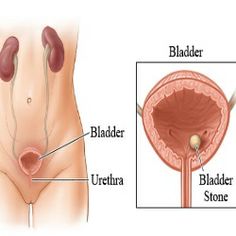
Treating bladder stones “ain’t” what it used to be!


Not that long ago if a patient had a small bladder stone the urologist would place through a cystoscope an instrument that would crush the stone into small pieces and then irrigate out the stone. If the stone was larger then it often times required an incision to open the bladder to manually remove the stone.

Today using a laser the stone can most often be fragmented safely without damaging the bladder mucosa and then irrigated free. 

As seen above a relatively small stone is fragmented into very small pieces and then irrigated out without any bleeding or need for a catheter. 

This procedure was done in our ambulatory surgery center and as an out patient. So in this case “the laser” has made a large impact on the convenience, cost, and safety of the patient with a bladder stone.


BPH 101-An animation

Our nurse practitioner Christie Woodruff found this info-cartoon and thought it would be a helpful in understanding prostate enlargement…in a fun way.

The urologists of Northeast Georgia Urological Associates treat BPH commonly and use both medical and minimally invasive surgical procedures to correct this male issue. You can contact us 24/7 by leaving your number and we’ll call with an appointment.

← Back

Thank you for your response. ✨

SlideShare overview of ED.

This format of explaining a medical condition is very informative. It is like a powerpoint presentation without having to listen to a speaker. SlideShare is considered the medium of choice for those not liking to read text only or watching a video. This is an excellent tool to use to further explain some urological conditions and form the foundation of understanding to help with an upcoming office visit. In addition it is easy to share.