Blog/News

Honey prevents catheter associated UTIs? Sweet.

Manuka honey could stave off catheter-associated UTIs

Published: Tuesday 27 September 2016

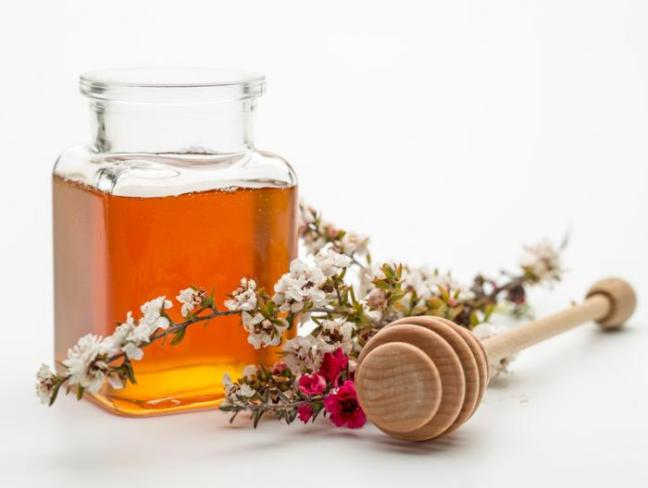
Manuka honey has long been hailed as a health food, with a number of studies reporting its antibacterial and anti-inflammatory properties. Now, a new study provides further evidence of such benefits, after finding it can halt the development of bacterial biofilms – groups of microorganisms that can adhere to surfaces and facilitate transmission of infections.
[Manuka honey]
Manuka honey could help combat catheter-associated urinary tract infections, say researchers.

Study co-author Bashir Lwaleed, of the Faculty of Health Sciences at the University of Southampton in the United Kingdom, and colleagues report their findings in the Journal of Clinical Pathology.


Manuka honey is produced by bees that pollinate the Manuka tree, native to New Zealand. While a delicious, albeit expensive food, previous research has suggested Manuka honey also offers health benefits.

The strongest evidence is for its antibacterial properties; a 2012 study, for example, suggested Manuka honey may be effective against chronic wound infections caused by Streptococcus pyogenes.

For their study, Lwaleed and team set out to determine whether Manuka honey has the potential to prevent the development of bacterial biofilms.


Testing Manuka honey’s effects on bacteria in lab dishes

The researchers cultured two strains of bacteria on 96 plastic dishes in the laboratory: Escherichia coli and Proteus mirabilis. Both bacteria are key causes of urinary tract infections (UTIs) that can arise with long-term catheter use.

The team diluted Manuka honey with distilled water before applying it to the bacteria, in order to test the effects of five different strengths: 3.3 percent, 6.6 percent, 10 percent, 13.3 percent, and 16.7 percent.

The researchers added the various concentrations of honey to two wells of each “growth” dish, while plain medium honey or artificial half-strength Manuka honey was added to the remaining two wells of each dish.

Each dish was sealed and incubated for 24, 48, and 72 hours, enabling the team to monitor how the honey impacted the development of biofilms.

In a separate experiment, the researchers added the honey to the growth dishes 24 hours after incubation, before incubating them for a further 4 or 24 hours. This was to assess how the honey affected biofilm growth following development.

Diluted Manuka honey reduced bacterial ‘stickiness’ by up to 77 percent

After 48 hours, the team found the lowest concentration of Manuka honey reduced the “stickiness” of E. coli and P. mirabilisbacteria by 35 percent – an indicator of reduced biofilm development – compared with plain medium honey or artificial half-strength Manuka honey.

After 72 hours, the team found the highest dilution of honey – 16. 7 percent – had reduced the stickiness of bacteria by 77 percent, and all other dilutions had reduced stickiness by at least 70 percent by that point.

In terms of biofilm growth, the researchers found all concentrations of Manuka honey had reduced growth after 4 hours; the highest concentration decreased growth by 38 percent after 4 hours, increasing to 46 percent after 24 hours.

The higher concentrations had an even stronger effect on biofilm growth after 48 hours, the team reports, but this was not the case with the 3.3 percent and 6.6 percent concentrations.

The researchers caution that their study has only shown how Manuka honey can reduce biofilm development or growth in laboratory conditions, so further studies are warranted to determine how the honey fares against bacteria in real-world settings.

“However, the model used demonstrates a capability of honey to inhibit the formation and early development of biofilms on solid plastic surfaces at concentrations that are not unduly viscous,” they add.

Adding honey to diet is ‘unlikely’ to help fight infection

Talking to Medical News Today, Lwaleed said the results could be beneficial for patients fitted with urinary catheters; according to the Centers for Disease Control and Prevention (CDC), of all hospital-acquired urinary tract infections, 75 percent are related to a urinary catheter.

“Honey may, subject to tolerability studies, be an effective antibacterial and biofilm inhibiting agent in catheter management – probably not prone to the induction of resistant pathogens as are many current antibiotics.”

Bashir Lwaleed

Asked whether adding Manuka honey to the diet may help fight infection, Lwaleed told MNT that it is unlikely.

“One of the reasons for using it in the bladder is that it is essentially a topical application, almost, if you will, an ‘external’ use comparable to current cutaneous use (impregnated in wound dressings, for example),” he explained. “The bladder wall structure and physiology is geared to preventing passage of substances from the urine into the body or the blood circulation, and the bladder lumen essentially is more or less in direct communication with the environment.”

“The caveat here is that bladder wall integrity may be partially compromised in disease states, so tolerability studies will need to include patients with some degree of bladder irritation or dysfunction,” added Lwaleed.

Learn about the health benefits and risks of honey.

Diluted honey inhibits biofilm formation: potential application in urinary catheter management?, Bashir Lwaleed et al., Journal of Clinical Pathology, doi:10.1136/jclinpath-2015-203546, published online 26 September 2016, abstract.

The BMJ news release, accessed 26 September 2016.

Additional source: CDC, Catheter-associated urinary tract infections (CAUTI), accessed 26 September 2016.

Additional source: Manuka honey inhibits the development of Streptococcus pyogenes biofilms and causes reduced expression of two fibronectin binding proteins, Rose A. Cooper et al., Microbiology, doi: 10.1099/mic.0.053959-0, published online 1 March 2012, abstract, accessed 26 September 2016.

Visit our Infectious Diseases / Bacteria / Viruses category page for the latest news on this subject, or sign up to our newsletter to receive the latest updates on Infectious Diseases / Bacteria / Viruses.

Please use one of the following formats to cite this article in your essay, paper or report:

MLA
Whiteman, Honor. “Manuka honey could stave off catheter-associated UTIs.” Medical News Today. MediLexicon, Intl., 27 Sep. 2016. Web.
9 Oct. 2016. <http://www.medicalnewstoday.com/articles/313126.php&gt;


APA
Whiteman, H. (2016, September 27). “Manuka honey could stave off catheter-associated UTIs.” Medical News Today. Retrieved from
http://www.medicalnewstoday.com/articles/313126.php.


Please note: If no author information is provided, the source is cited instead.


OAB Patient Guide

oab-1

Everything anyone would need to know about Overactive Bladder from the Urology Care Foundation.

Millions of people in the United States struggle with Overactive Bladder (OAB) symptoms. The most common symptom is the ongoing urgent need to go to the bathroom. Now.

OAB can interfere with work, going out with friends, exercise and sleep. It can lead you to the bathroom many times during the day or night. Some people leak urine (pee) after this urgent “gotta go” feeling. Others feel afraid they’ll leak.

Fortunately, there is help and there are treatments. Read More…

← Back

Thank you for your response. ✨

Warning
Warning
Warning

Warning.

Mrybetriq (Mirabegron) and Solifenacin (Vesicare) work together for IC and OAB patients.

download-mm

Mirabegron Plus Solifenacin Superior to Solifenacin Alone for Incontinence, Frequent Urination 

Urology – September 30, 2016 – Vol. 34 – No. 7

Combining mirabegron 50 mg with solifenacin 5 mg was superior to solifenacin 5 mg alone for improving symptoms of incontinence and frequent urination.

Article Reviewed: Efficacy and Safety of Mirabegron Add-On Therapy to Solifenacin in Incontinent Overactive Bladder Patients With an Inadequate Response to Initial 4-Week Solifenacin Monotherapy: A Randomised Double-Blind Multicentre Phase 3B Study (BESIDE). Drake MJ, Chapple C, et al: Eur Urol; 2016;70 (July): 136-145.

Continue reading Mrybetriq (Mirabegron) and Solifenacin (Vesicare) work together for IC and OAB patients.

Considering a Vasectomy?

1041781576-front

We’ve done thousands!

Our Vasectomy Page Link

Contact us now to schedule a

No scalpel/No needle/We cater to cowards…

Vasectomy-24/7.

← Back

Thank you for your response. ✨

Warning
Warning
Warning

Warning.


e5e3d072bcf0e714ffff8004ffffd502

Overactive bladder vs. Stress incontinence-What’s the difference?

sui_gui_logo

Overactive bladder (OAB) and stress urinary incontinence (SUI) are two common lower urinary tract or bladder health problems that can cause incontinence. Incontinence is the leaking of urine that can’t be controlled. Read More…

Our page on incontinence.

Everything you need to know about incontinence from the NIH.

Northeast Georgia Urological Associates has experience in treating all forms of incontinence. Contact us for an appointment.

← Back

Thank you for your response. ✨

Warning
Warning
Warning

Warning.

Is testosterone replacement safe after you’ve been treated for prostate cancer?

Prostate-Cancer-Symptoms

TRT Requires Close Long-Term Follow-Up

Urology – May 1, 2007 – Vol. 22 – No. 11

Patients with low serum testosterone levels and symptomatic hypogonadism who have undergone treatment for early, localized prostate cancer may be treated with testosterone replacement therapy as long as they are followed closely and remain in remission.

Article Reviewed: Testosterone Replacement for Hypogonadism After Treatment of Early Prostate Cancer With Brachytherapy. Sarosdy MF: Cancer; 2007; 109 (February 1): 536-541.

Testosterone Replacement for Hypogonadism After Treatment of Early Prostate Cancer With Brachytherapy.

Sarosdy MF:
Cancer; 2007; 109 (February 1): 536-541

Read More…

A stone in your kidney but no pain…what to do?

Spero072215-400x250

In general “if it ain’t broke don’t fix it” however…read on…

Your Best Management for Asymptomatic Nonobstructing Kidney Stones

Urology – August 30, 2015 – Vol. 33 – No. 2

Lower-pole kidney stones are less likely to become symptomatic during observation.

Article Reviewed: The Natural History of Nonobstructing Asymptomatic Renal Stones Managed With Active Surveillance. Dropkin BM, Moses RA, et al: J Urol; 2015;193 (April): 1265-1269.

Objective: To determine the natural history of observed nonobstructing asymptomatic kidney stones and factors associated with eventual stone-related events.

Design: Retrospective chart review of the records of 160 kidney stones in 110 patients on active surveillance.

Methods: Stone characteristics, patient characteristics, and stone-related parameters were evaluated to determine factors for stone-related symptoms, spontaneous passage, requirement for surgical intervention, and stone growth.

Results: 160 stones with an average size of 7.0 mm ± 4.2 mm in 110 patients were followed up 41 ± 19 months. A total of 28% (45 of 160) of stones caused symptoms and 2% (3 of 160) caused silent obstruction on average of 37 ± 17 months. Upper-pole/mid-pole stones were more likely than lower-pole stones to become symptomatic (40%) or pass spontaneously (15%). No other factors demonstrated statistical significance in predicting symptoms.

Conclusions: Over a 3-year period, most asymptomatic nonobstructing renal calculi remained asymptomatic. Approximately 30% caused symptoms, 20% required surgical intervention, 20% grew >50% initial size, and 7% passed spontaneously. Lower-pole stones caused fewer issues than upper- or mid-pole stones. Silent obstruction may occur and necessitates regular imaging and follow-up of even asymptomatic stones.

Reviewer’s Comments: This is a very nice article following the natural history of asymptomatic nonobstructing kidney stones, which are often picked up on imaging for other indications. It shows almost identical results to previous studies, which is that over a specified period (average of 3 years in this study), approximately 30% of stones will become symptomatic or need intervention. In this study, however, if you account for patients (instead of stones), nearly 40% became symptomatic over the study period. One must also consider that 20% of stones in this study grew >50% their original size. A small percentage developed silent obstruction, which is the most concerning aspect in regard to possible renal function loss. The authors conclude that most stones remain asymptomatic over time and hint that active surveillance may be the best option. The authors make a very valid point. However, the debate becomes whether you and your patient consider 30% to 40% as an acceptable number. Are we really saving 70% of individuals from needed intervention or having symptoms, or are we just delaying the inevitable? With the exception of uric acid stones, which may dissolve, stones do not disappear. I think with longer follow-up, more will eventually become symptomatic. Whether you treat prophylactically or only treat history of kidney stones, and lifestyle. Overall, this is a nice article to provide numbers to patients in regard to nonobstructing asymptomatic kidney stones.(Reviewer–David A. Duchene, MD).


Sex helps pass kidney stones?

Want to improve your sex life? Get a kidney stone!

download (3)

Urology – January 30, 2016 – Vol. 33 – No. 9

Sexual intercourse 3 to 4 times per week may increase the probability of spontaneous stone passage for distal ureteral stones <6 mm in size.

Article Reviewed: Can Sexual Intercourse Be an Alternative Therapy for Distal Ureteral Stones? A Prospective, Randomized, Controlled Study. Doluoglu OG, Demirbas A, et al: Urology; 2015;86 (July): 19-24.

Objective: To investigate the role of sexual intercourse on passage of distal ureteral stones.

Design: Prospective, randomized controlled study.

Participants: 90 male patients with distal ureteral stones <6 mm in size undergoing a trial of spontaneous passage.

Methods: Group 1 was randomized to sexual intercourse 3 to 4 times a week, group 2 received tamsulosin 0.4 mg/day for medical expulsive therapy, and group 3 served as a control. Expulsion rate was compared at 2 and 4 weeks.

Results: Mean stone size was similar between all groups at just under 5 mm (group 1, 4.7 mm; group 2, 5.0 mm; group 3, 4.9 mm). At 2 weeks, 83.9% (26/31) patients in the sexual intercourse group had passed stones. In comparison, 47.6% (10/21) in the tamsulosin group and 34.8% (8/23) in the control group had passed stones (P =0.001). At 4 weeks, the differences lost significance, but still showed benefit for the sexual intercourse group with 93.5% passage compared to 81.0% passage in the tamsulosin group and 78.3% passage in the control. The mean expulsion time was 10.0 days in the sexual intercourse group, 16.6 days in the tamsulosin group, and 18.0 days in the control group.

Conclusions: Sexual intercourse 3 to 4 times per week may increase the probability of spontaneous stone passage for distal ureteral stones <6 mm in size.

Reviewer’s Comments: This study led to lots of conversation given the unique and unusual approach proposed to improve spontaneous ureteral stone passage. The authors hypothesized that sexual intercourse may improve spontaneous stone passage by nitric oxide release leading to relaxation of ureteral muscles. They found that the sexual intercourse group passed their stones much faster than either the tamsulosin or control group. While intriguing, several problems exist with the study, which makes me somewhat surprised that it was published. The study is extremely underpowered based on overestimations in initial statistical planning. No compliance measures with sexual activity and/or lack of sexual activity or with taking tamsulosin as prescribed were performed. Only 6% of patients were lost to follow-up in the sexual activity group compared to 23% in the tamsulosin and control arms. If those patients were lost to follow-up because they passed their stones, then the study would have no significance. Last, sexual activity would be a very brief exposure of nitric oxide to the ureter (if the theory is correct). Younger patients should still get nocturnal erections, which would also release nitric oxide for brief periods. It seems that a more consistent delivery of nitric oxide such as with PDE5 inhibitors may be more successful, and PDE5 inhibitors have shown some promise in early studies. Overall, the study makes a good headline and interesting discussion, but much better studies are needed to find a relevant method to facilitate stone passage.(Reviewer–David A. Duchene, MD).

Northeast Georgia Urological Associates-Active Surveillance for Prostate Cancer

If you have been recently diagnosed with prostate cancer you owe it to yourself and your family to watch the following video. Active surveillance should be considered by you to be one of the treatment options for your prostate cancer.

image t

Contact us 24/7 for an appointment-Leave your number in the form below and we’ll call you the next business day. Our urologists have over thirty years of experience in management and treatment of prostate cancer.

← Back

Thank you for your response. ✨

Warning
Warning
Warning

Warning.

Fall is in the air…bladder healthy soup?

Soup

Take advantage of the extra time you spend inside this winter to make some tasty meals. Here is a recipe for Chicken and White Bean Soup. It’s made with ‘good for you’ ingredients – and won’t bother a sensitive bladder.

Makes 6 servings, 1 ½ cups each
Calories per serving: 172

Read More…

Need an appointment? Contact us 24/7 and leave your number and we’ll call by the next business day.

← Back

Thank you for your response. ✨

Warning
Warning
Warning

Warning.